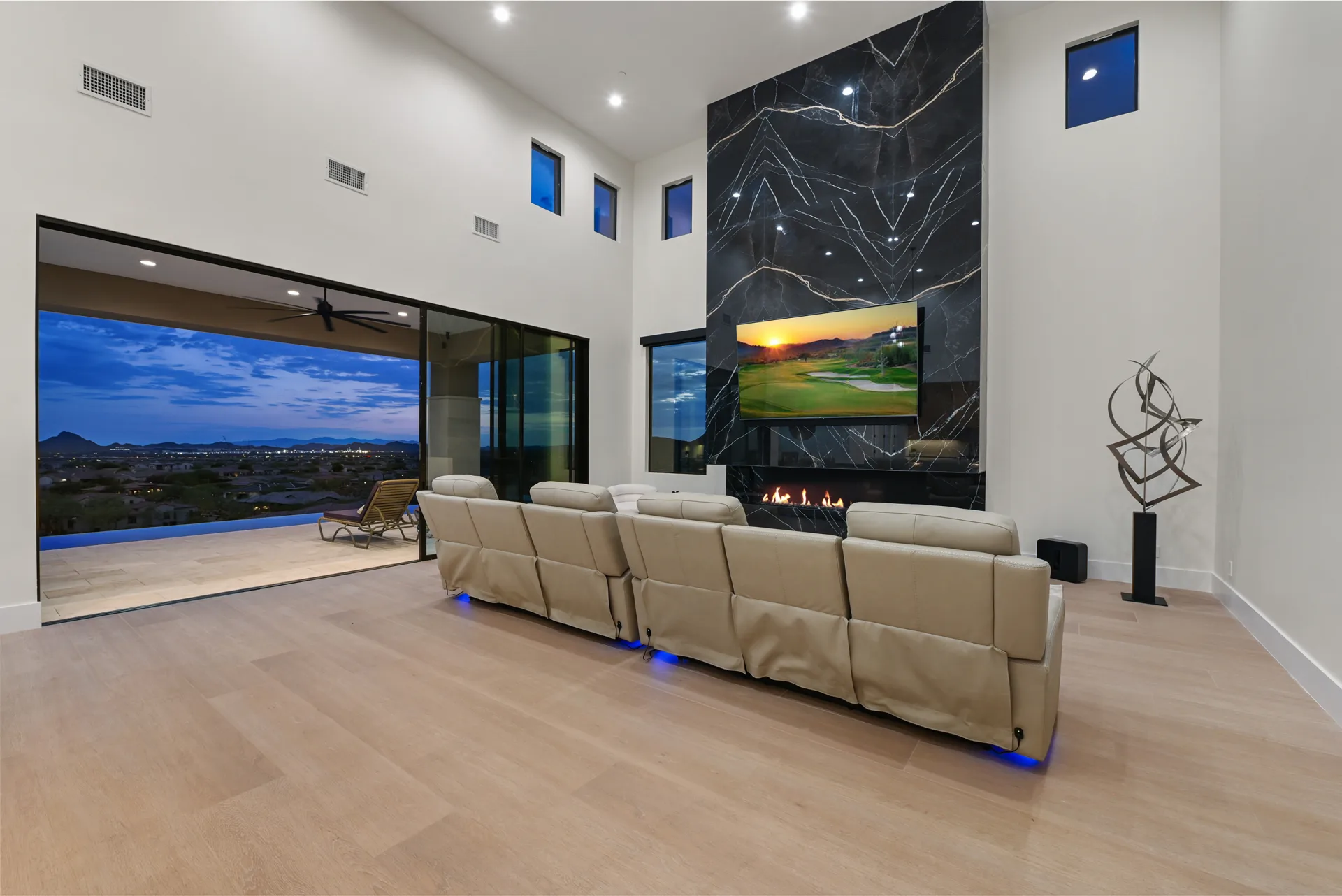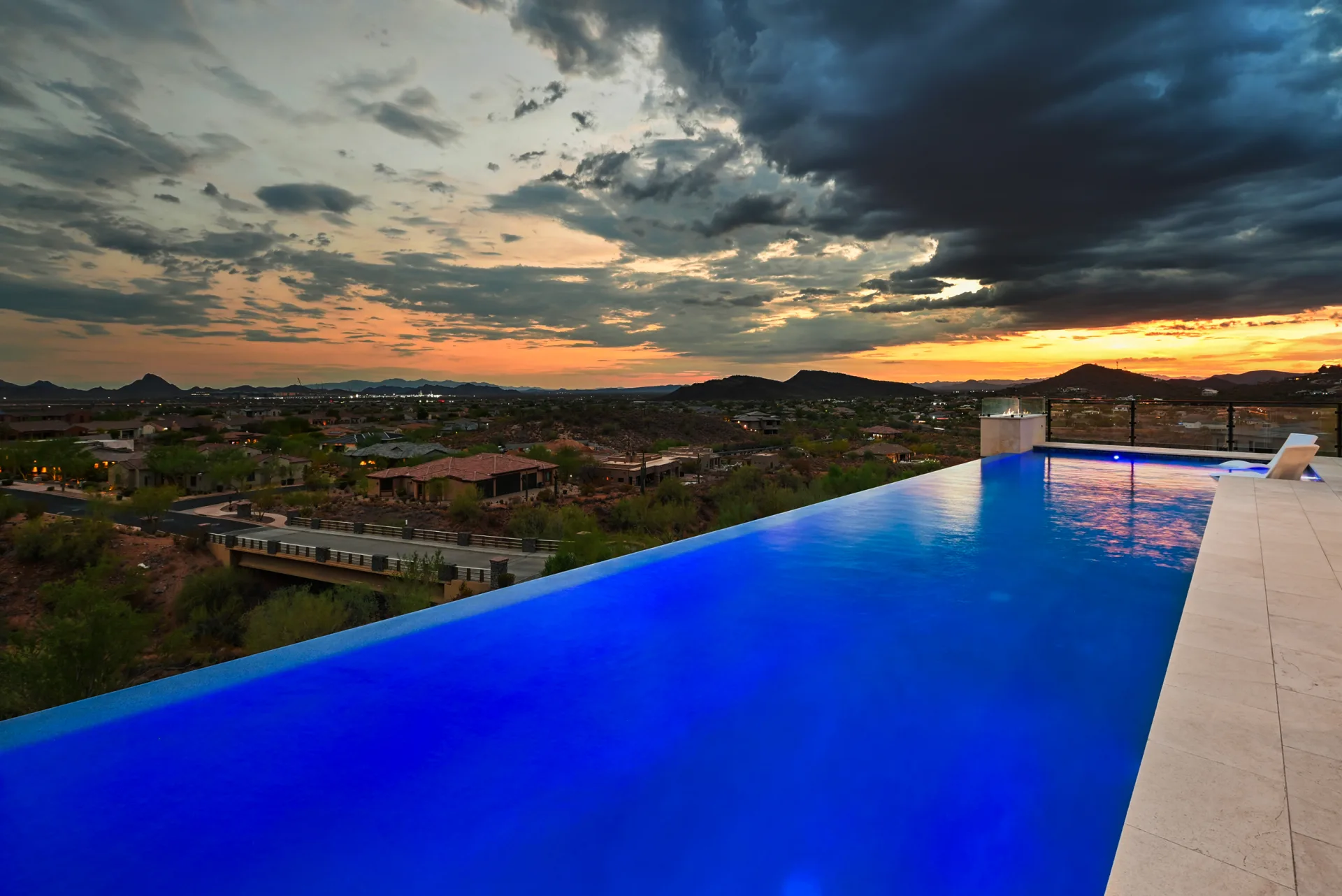
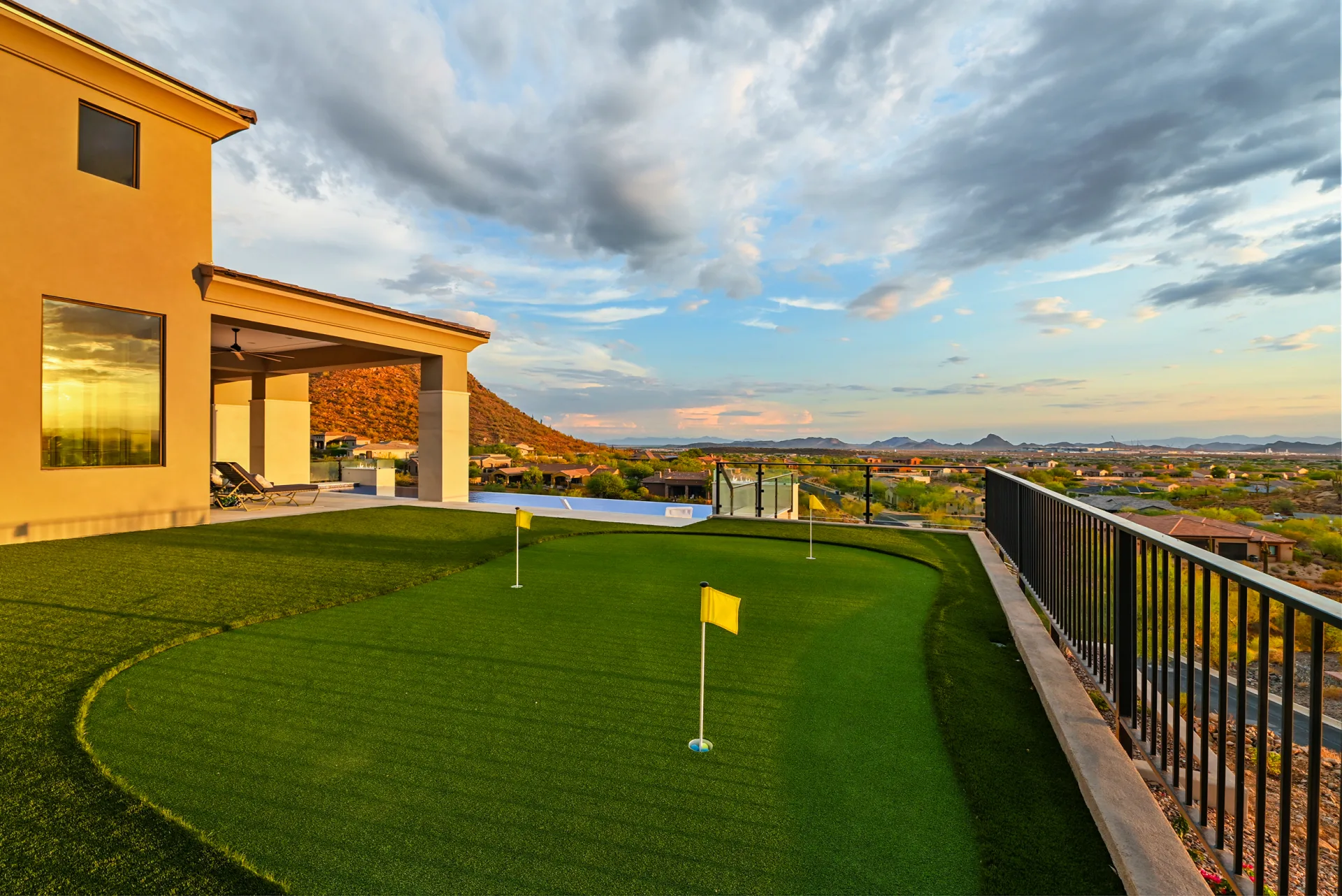
A backyard putting green is one of the most requested features on golf community lots across the Valley, and one of the easiest to get wrong when it is added at the end. A green that putts true, drains after a monsoon, and looks like part of the landscape is planned alongside the pool, patios, and grading. That is why we treat it as part of the home's pool and landscaping design rather than an accessory dropped into the yard.
Why a Putting Green Belongs in the Site Plan
A putting green takes up a meaningful piece of the backyard and needs a specific slope, base, and drainage path. When it is drawn into the site plan with the house, it can sit where the views and sun work best and share grading and drainage with the rest of the yard.
Added later, the green often ends up squeezed into leftover space, sitting on soil that was never compacted for it, or blocking the water that used to flow across the lot. Planning it early avoids rework and gives the landscape a cleaner composition.
Choosing the Right Location on the Lot
The best spot is usually visible from the great room or the main covered patio, so the green adds to the view even when no one is playing. On lots in Scottsdale and Paradise Valley, it often sits between the pool deck and the desert edge, where it softens the transition into native planting.
- Keep the green clear of pool splash zones and tree canopies that drop leaves and debris.
- Avoid low points where stormwater collects during a monsoon.
- Leave room for a short approach area if chipping is part of the plan.
- Consider afternoon sun, since evening play is the most common use in summer.
Sizing the Green for How You Play
Size depends on how the green will be used. A practice green for lag putting and short putts can be compact, while a green meant for entertaining and small competitions benefits from more length and several cup locations.
- Plan at least three to five cup locations so putts can vary in length and break.
- Allow a fringe band around the edge so balls that run long stay on turf.
- Leave space for a collar of taller turf if chipping onto the green is planned.
- Match the outline to the landscape, using soft curves rather than a rectangle.
Contours and Break
A flat green gets boring quickly. Gentle contours add break and make every cup location play differently. The slopes are shaped into the compacted base, so they are designed before any turf goes down.
The contours have to stay subtle. Too much slope and the ball will not stop near the hole, especially on fast synthetic turf. Most residential greens use mild rolls and a primary slope that also helps carry water off the surface toward the drainage system.
The Base and Drainage Underneath
What sits below the turf decides how the green performs over time. Arizona soils range from caliche to expansive clay, and each behaves differently when it gets wet. The subgrade is excavated, compacted, and topped with layers of crushed aggregate and fine material that hold their shape.
- A compacted subgrade prevents settling and low spots after the first season.
- Layered aggregate allows water to pass through the turf and away from the surface.
- Perimeter drains or a connection to the site drainage plan carry monsoon runoff off the lot.
- A finely graded top layer gives the turf a smooth, consistent roll.
We coordinate this work with the overall grading so the green, the pool deck, and the patios all shed water in the right direction.
Synthetic Turf or Natural Grass
Natural bentgrass greens need cool temperatures, daily mowing, and steady water, which makes them hard to keep healthy through a Phoenix summer. For most Arizona homeowners, a high quality synthetic putting turf is the practical choice.
- Synthetic putting turf holds a consistent speed year round with brushing and periodic infill top-offs.
- Nylon and polypropylene putting surfaces offer different speeds and feel, so it is worth rolling a few samples.
- Fringe and collar turf use longer fibers to frame the green and slow the ball.
- Lighter colored or heat-reducing infills help keep surface temperatures down in direct sun.
Designing for Arizona Heat
Synthetic turf in full summer sun gets hot. Placing the green where it receives some afternoon shade from the house or nearby trees makes evening play more comfortable. Shade structures nearby, such as a ramada or a covered seating area, also give players a place to cool off between rounds.
Irrigation for the surrounding planting should be designed so overspray does not reach the green, since mineral-heavy water can leave spots on the turf. Drip irrigation in the adjacent beds solves most of this.
Blending the Green Into the Landscape
A green looks best when it reads as part of the yard rather than a mat laid on gravel. Edges that flow into decomposed granite, boulders, and low desert planting tie it to the rest of the landscape and to the native desert beyond.
- Use boulders and berms to frame the green and add a sense of enclosure.
- Bring a path from the patio to the green in the same paver used on the deck.
- Choose low, soft planting at the edges so balls are easy to retrieve.
- Keep cactus and spiny species well away from the playing surface.
Pairing the Green With Other Outdoor Rooms
A putting green gets the most use when it sits close to the places people already gather. A shaded seating area at the edge of the green gives guests a place to watch, and an outdoor kitchen or bar within a short walk keeps the green part of the evening rather than a separate destination.
- Place seating where players and spectators can both see the pool and the green.
- Run a path from the outdoor kitchen to the green so drinks and food move easily.
- Add a storage cabinet or bench nearby for putters, balls, and flags.
- Plan power and audio conduit before the base goes in so nothing is trenched through the finished turf later.
Our backyard and pool planning guide covers how these outdoor rooms are laid out together on a single lot.
Lighting for Night Play
Summer evenings are prime time for the green, so lighting is planned with the rest of the landscape lighting. Low, shielded fixtures around the perimeter light the surface without glare, and the controls tie into the home system so the green, pool, and patios can be set as one scene.
Many communities limit exterior lighting to protect dark skies, so fixture types and brightness are reviewed during HOA design review as part of our process.
Frequently Asked Questions
- How Big Should a Backyard Putting Green Be?
- It depends on how you plan to use it. A compact green works for short putts and practice, while a longer green with three to five cup locations works better for entertaining and varied putts.
- Is Synthetic Turf Better Than Real Grass for a Putting Green in Arizona?
- For most Arizona homes, yes. Natural putting grasses struggle in desert heat and need constant care, while quality synthetic turf keeps a consistent speed through the year.
- Does a Putting Green Need Drainage?
- Yes. A permeable base and a connection to the site drainage plan keep water from pooling after monsoon storms and prevent the surface from shifting over time.
- Can a Putting Green Be Added After the House Is Built?
- It can, but planning it with the house gives better placement, grading, and drainage. Designing it alongside the pool and patios also avoids tearing out finished landscape later.
Start the conversation