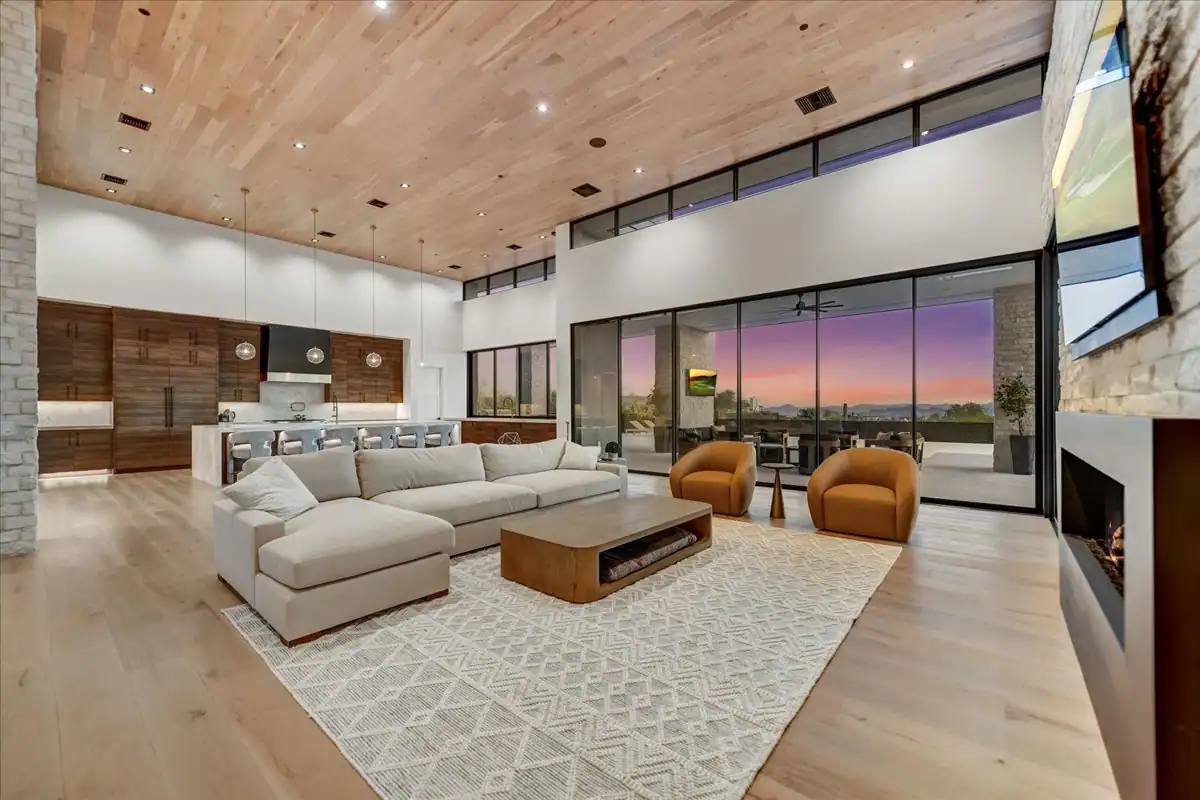
Most luxury custom homes in Arizona are delivered through one of two models. Design-bid-build separates design and construction into two contracts. Design-build puts architecture, engineering, and construction under one team with one contract. Either can produce a beautiful home. The experience along the way is different, and so is how the project handles budget, schedule, and the inevitable surprises. Our custom home service is set up as a design-build practice for the reasons below.
How Design-Bid-Build Works
In a design-bid-build process, the homeowner hires an architect to develop the design. Once construction documents are largely complete, the design is sent to two or three builders for competitive bid. The homeowner picks a builder based on price, relationship, and confidence. Construction starts after the contract is signed.
The appeal is independence. The architect represents only the design, the builder represents only the construction, and the homeowner has a clear contract with each. On the right project with the right team, it works well.
Where Design-Bid-Build Runs into Trouble
Two problems show up almost every time on luxury projects delivered this way.
- Budget gap at first bid: drawings get developed without real-time construction pricing, and the first bid comes back tens or hundreds of thousands over expectation
- Hand-off friction: the builder inherits a design package they had no role in shaping, and constructability questions surface that would have been easier six months earlier
- RFI pile-ups that turn into change orders during construction
- An adversarial dynamic between the design team and the construction team
How Design-Build Works
In a design-build process, architecture, engineering, and construction are coordinated under one accountable team from the first feasibility walk through final punch list. The architect designs with real-time cost feedback. The builder is part of the design conversation. Long-lead materials get ordered at the right moment. The homeowner sees a single budget and a single schedule that get tighter as the project progresses.
There is no bid event. The price is built up together, with the homeowner watching it form, and refined as more decisions get locked.
Where Design-Build Runs into Trouble
Design-build asks the homeowner to commit to one team earlier in the process. That commitment is only as good as the team itself. A poorly run design-build firm can use the integration to avoid hard conversations about cost or schedule, since there is no external bid event to surface the truth.
The remedy is the same as on any high-stakes hire: references from completed projects at similar scale, transparent budgeting, weekly updates, and a builder who is on site daily. With the right team, design-build is the cleanest delivery model for a luxury custom home.
How Each Model Handles Surprises
Every luxury custom home runs into surprises: a soils report worse than expected, a long-lead material shifting by six weeks, a code question that came in late.
In design-bid-build, those surprises usually become change orders and emails between the architect and the builder while the homeowner waits for an answer. In design-build, they are handled inside one team, usually before the homeowner sees a problem at all.
How the Two Models Handle Budget over Time
A design-bid-build budget is a discrete event: designed, then priced, then negotiated. A design-build budget is a living document that starts as a range and tightens through pre-construction.
Homeowners who want a fixed number early are often better served by design-build because that number is being built up in real time rather than revealed at the end. The pre-construction phase is where that work happens.
Which Model Fits Your Project
If you already have an architect you trust, an interior designer you want to retain, and the patience to manage the relationship across two contracts, design-bid-build can be the right call.
If you want one team accountable for design, budget, schedule, and craft from feasibility through move-in, design-build is the cleaner model. Most of the luxury Scottsdale and Paradise Valley homes we have built were delivered this way. You can see the finished work in our portfolio. Reach out through our contact page if you want a candid recommendation on which model fits your project.
Frequently Asked Questions
- Is design-build always faster than design-bid-build?
- Usually, yes, because there is no separate bid event and long-lead orders can be placed during design. The savings tend to be measured in months, not weeks, on luxury Scottsdale projects.
- Do I lose design quality in a design-build model?
- Not with the right team. A design-build firm still hires or partners with senior architects. The difference is that construction feedback shapes the design in real time rather than after it is complete.
- Can I bring my own architect into a design-build project?
- Sometimes. Some design-build teams work with an outside architect the homeowner brings, others insist on their in-house design team. Ask early so the working relationship is clear before design starts.
- How do I compare pricing between the two models?
- Do not compare a single design-bid-build bid to a design-build estimate. Compare the working budget at the same design milestone, and ask each team how the number is expected to move between now and contract signing.
Start the conversation